
Global supply chains offer businesses more transportation choices than ever before. This air freight guide, along with insights on ocean freight, ground transportation, and rail, explores how each option serves different purposes. Selecting the right one can directly influence inventory levels, customer satisfaction, production continuity, and profitability.
For businesses moving urgent, high-value, perishable, or inventory-critical goods, air freight can provide advantages that extend far beyond transportation speed.
This air freight guide explains when businesses should use air cargo, why faster transportation can create measurable financial value, which shipments are best suited for aviation, and what companies should consider when developing an international air freight strategy.
When should a business use air freight? Air freight is most valuable when speed, inventory availability, shipment value, product shelf life, production continuity, or customer deadlines outweigh the savings available through slower transportation. Businesses commonly use air cargo for urgent, high-value, perishable, pharmaceutical, aerospace, ecommerce, and production-critical shipments.
Understanding this distinction is essential for any air freight guide, because the best transportation decision is not always the least expensive one. It is the option that creates the greatest total value for the supply chain.
What Is Air Freight?
Air freight is the transportation of commercial goods by aircraft between domestic or international markets.
This air freight guide explains how cargo can move through dedicated freighter aircraft or available cargo capacity on passenger aircraft, depending on shipment requirements, routes, and capacity availability.
Dedicated freighters are specifically configured for cargo transportation and can accommodate a broad range of goods, including shipments that may not be suitable for passenger aircraft.
An effective air freight guide should therefore begin with an important distinction: air transportation is not simply about moving freight faster. It provides businesses with access to a transportation network designed around speed, connectivity, reliability, and responsiveness.
The International Air Transport Association (IATA) provides extensive industry information about the role air cargo plays in connecting businesses and markets throughout the global economy.
When Should Businesses Use Air Freight?
Air freight makes the most sense when time has measurable business value.
Businesses should consider air transportation when shipments involve:
- Urgent delivery requirements
- High-value products
- Production-critical components
- Perishable goods
- Pharmaceutical or healthcare products
- Ecommerce inventory
- Seasonal merchandise
- Emergency replenishment
- Aerospace components
The decision should ultimately depend on the financial or operational consequences of waiting.
When it comes to our air freight guide, consider a manufacturer missing a component required to keep a production line operating. Choosing slower transportation may save money on the freight invoice, but it can create significantly greater losses through production downtime. That’s why understanding your air freight options is essential to making the right shipping decisions for your business.
Similarly, an online retailer facing an unexpected inventory shortage may lose revenue every day products remain unavailable.
These scenarios demonstrate one of the central principles of this air freight guide: transportation should be evaluated based on total business impact, not freight price alone.
Why Do Businesses Choose Air Freight?
Speed is the most obvious advantage, but businesses select air cargo for several additional reasons.
Faster Transit
International air freight can move goods between distant markets in days rather than the weeks often required by slower transportation modes.
Reliable Scheduling
In this air freight guide, discover how predictable flight schedules help businesses coordinate inventory, warehousing, production, and customer commitments.
Global Connectivity
Aviation networks connect major commercial markets worldwide, allowing businesses to reach international customers and suppliers efficiently.
Lower Inventory Requirements
Faster replenishment can reduce the amount of safety stock companies need to maintain.
Greater Responsiveness
Air freight allows businesses to react quickly to unexpected demand, supply shortages, or operational disruptions.
These benefits explain why air transportation remains an essential part of modern global trade.
As discussed in How Air Cargo Aviation Keeps Time-Critical Global Trade Moving, aviation provides the speed and operational responsiveness required by industries where delays can quickly become business disruptions.
What Types of Cargo Are Best Suited for Air Freight?
Air transportation creates the greatest value when the shipment itself has high financial, operational, or time-sensitive importance.
Common examples include:
- Pharmaceuticals
- Medical devices
- Electronics
- Aerospace components
- Automotive parts
- Fresh flowers
- Seafood and other perishables
- High-value industrial equipment
- Ecommerce products
- Emergency replacement parts
An air freight guide must also recognize that product value is not the only consideration.
A relatively inexpensive component can become extremely valuable when an entire manufacturing process depends on its arrival.
The same principle applies to inventory. A product may have a modest unit value, but an ecommerce company facing thousands of backorders could lose significant revenue if replenishment is delayed. That’s why our air freight guide recommends that businesses consider air freight for high-demand products, ensuring fast replenishment and minimizing the risk of lost revenue.
As explored in How Sunrise Air Cargo Handles Time-Critical and High-Value Shipments, the importance of a shipment often depends on the business activity it protects rather than simply its declared value.
Air Freight vs. Ocean Freight: Which Should Businesses Choose?
One of the most common questions businesses ask is whether air or ocean transportation provides the better solution.
The answer depends on the shipment.
Ocean freight is generally better suited for:
- Large-volume shipments
- Heavy commodities
- Non-urgent inventory
- Cargo planned well in advance
- Shipments where transportation cost is the primary consideration
Air freight is generally better suited for:
- Time-sensitive goods
- High-value cargo
- Urgent replenishment
- Production-critical components
- Perishable products
- Inventory with strict delivery requirements
This air freight guide does not suggest that one transportation mode is universally better than another.
Successful supply chains frequently use both.
Ocean freight may handle planned bulk inventory while air cargo provides rapid replenishment when demand changes unexpectedly.
Our Air Cargo vs. Ocean Freight: The Complete Comparison Guide for Modern Supply Chains provides a deeper comparison of speed, cost, inventory, reliability, and operational risk.
Why the Cheapest Freight Rate May Not Be the Lowest-Cost Option
Transportation costs represent only one part of total logistics expense.
Slower transportation may also increase:
- Inventory carrying costs
- Warehouse requirements
- Insurance expenses
- Working capital requirements
- Stockout risk
- Production disruption risk
This changes how businesses should evaluate air freight.
For example, as outlined in any comprehensive air freight guide, paying more to transport inventory quickly by air may allow a business to reduce warehouse stock, improve inventory turnover, and generate revenue sooner.
In other cases, air freight may prevent a costly production shutdown or protect a customer commitment.
This concept is explored in greater detail in The Economics of Air Cargo: When Speed Creates More Value Than Cost Savings, where we explain why total supply chain economics often matter more than transportation price.
The World Trade Organization provides broader information on the international trade environment and the global movement of goods.
Why Reliability Matters Alongside Speed
The fastest transportation option has limited value if businesses cannot predict when cargo will arrive.
Reliable transportation allows organizations to plan:
- Production schedules
- Warehouse receiving
- Inventory replenishment
- Ground transportation
- Customer deliveries
For this reason, any useful air freight guide must evaluate reliability alongside transit time.
Modern businesses increasingly require transportation partners capable of providing both.
As discussed in Air Cargo Performance After Peak Season: What Shippers Should Know, consistent performance throughout the year helps businesses build more predictable and resilient supply chains.
Air Freight as a Tool for Time-Critical Logistics
Air cargo becomes particularly valuable when the cost of waiting increases with every hour or day.
In this air freight guide, we’ll explore several examples of urgent shipping needs: an aircraft awaiting a replacement component, a production line missing an essential part, a healthcare provider requiring specialized equipment, or an ecommerce company replenishing a fast-selling product.
In these circumstances, transportation speed becomes a business continuity tool.
Rather than asking whether air freight costs more, businesses should ask whether the value protected by faster transportation exceeds that additional expense.
For many time-critical shipments, the answer is yes.
That principle is fundamental to understanding when and why businesses should incorporate air cargo into their broader logistics strategy — and it’s a key concept in any comprehensive air freight guide.
How Does the Air Freight Process Work?
Understanding the transportation process helps businesses plan shipments more effectively.
Although exact procedures depend on the origin, destination, commodity, and regulatory requirements, a typical international air cargo shipment moves through several stages:
- Shipment planning: The shipper determines cargo dimensions, weight, commodity requirements, destination, and required delivery time.
- Booking and capacity confirmation: Space is secured based on aircraft availability, route, cargo type, and schedule.
- Cargo preparation: Goods are packed, labeled, documented, and prepared according to applicable transportation requirements.
- Origin handling: Cargo is received, processed, screened, and prepared for aircraft loading.
- Air transportation: The shipment moves to its destination either directly or through connecting cargo hubs.
- Destination handling: Cargo is unloaded and processed through the appropriate terminal procedures.
- Customs and final delivery: After applicable clearance requirements are completed in this air freight guide, the shipment continues to its final destination.
A complete air freight guide should emphasize that efficient execution at every stage matters. Fast aircraft transportation can lose much of its advantage if cargo experiences unnecessary delays during handling, transfers, or documentation.
Direct vs. Connecting Air Cargo Routes
Route structure can significantly influence total transit time.
A connecting shipment may require unloading, temporary storage, transfer to another aircraft, and coordination with another flight schedule.
Every additional connection introduces another operational dependency.
Direct routes can help reduce:
- Cargo handling
- Transfer time
- Missed connection risk
- Transit variability
- Operational complexity
For time-sensitive goods, fewer connections can therefore create meaningful advantages.
As explained in Why Direct Air Cargo Routes Reduce Risk, Handling, and Transit Time, simplifying the transportation journey can improve both shipment integrity and predictability.
Businesses should not automatically assume a direct route is always the best option. Availability, schedule, capacity, and final destination still matter. However, when direct service aligns with shipment requirements, it can provide significant operational value.
Why Dedicated Freighters Matter
Another important consideration in this air freight guide is the type of aircraft carrying the shipment.
This air freight guide covers everything you need to know about how cargo moves around the world. Air cargo can travel aboard passenger aircraft or dedicated freighters. Both play important roles in global logistics, but dedicated cargo aircraft provide capabilities designed specifically around freight.
Dedicated freighters can support:
- Greater cargo-focused capacity
- Specialized shipment profiles
- Larger freight configurations
- Flexible cargo operations
- Time-sensitive transportation
For businesses with recurring or specialized air freight requirements, dedicated freighter capacity can provide additional operational flexibility.
Aircraft capability is especially important when cargo dimensions, weight, handling requirements, or shipment urgency limit available transportation options.
Aircraft Selection Influences Cargo Performance
Not every cargo aircraft is designed for the same mission.
When consulting any air freight guide, key factors like payload, range, cargo configuration, reliability, and operational efficiency all play a critical role in determining where and how an aircraft can be deployed.
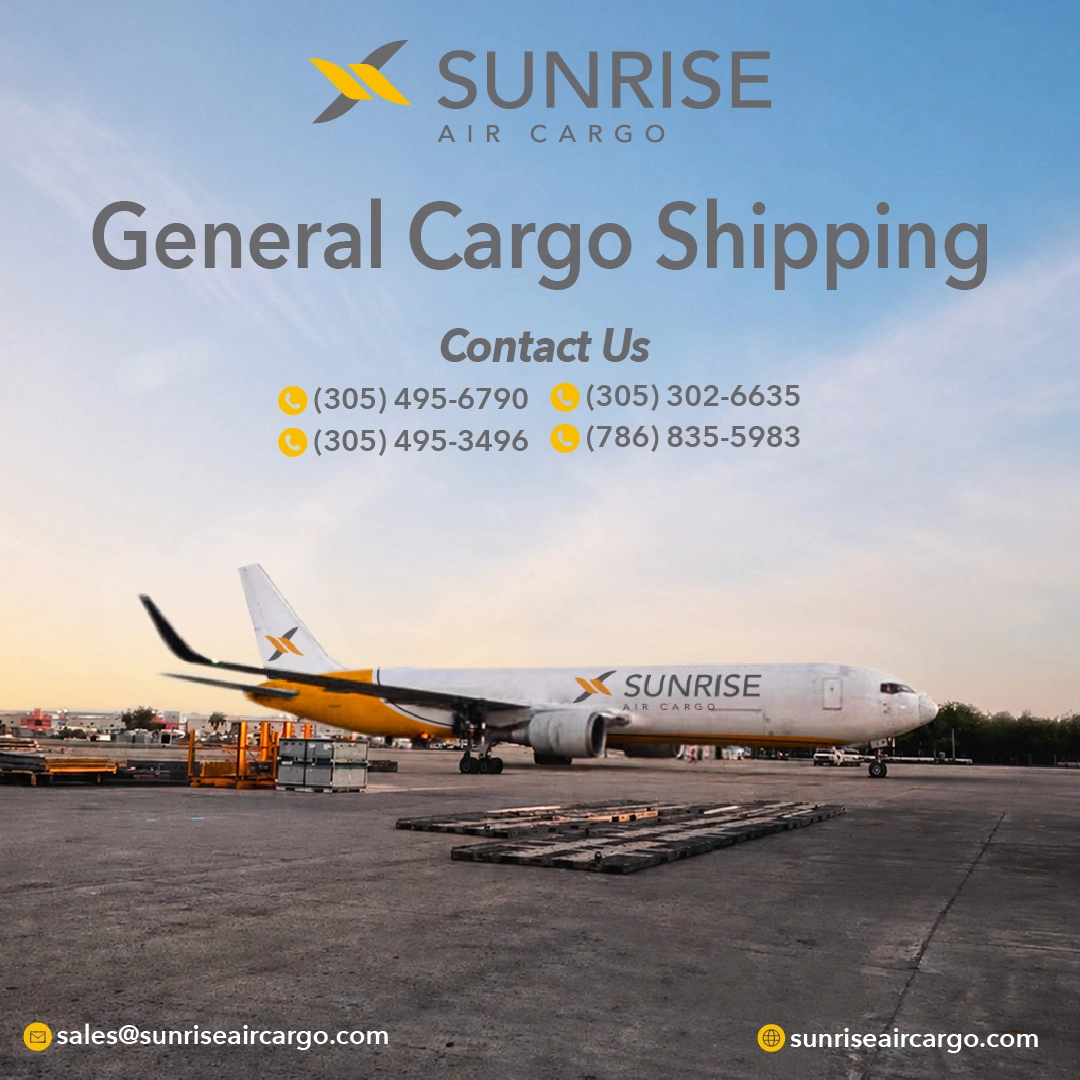
At Sunrise Air Cargo, the Boeing 767-300ER provides a balance of capacity and operational flexibility suited to modern cargo transportation.
This air freight guide covers an aircraft that supports a wide variety of shipment profiles while providing the reliability required for scheduled international operations.
Readers interested in understanding the aircraft itself can explore Inside the Boeing 767-300ER: Why It’s One of the World’s Most Trusted Cargo Aircraft.
Official technical and aircraft information is also available from Boeing: https://www.boeing.com/commercial/767
How Important Is Shipment Visibility?
Modern air freight is increasingly about information as well as transportation.
Businesses want to know:
- Has the shipment been accepted?
- Has it departed?
- Where is it in the transportation process?
- When is it expected to arrive?
- Has an operational exception occurred?
Visibility helps supply chain teams coordinate warehouses, inventory, production, ground transportation, and customer communication.
This air freight guide explains why early exception awareness is critical for time-sensitive shipments — giving businesses more time to respond and keep deliveries on track.
Digitalization is therefore becoming an increasingly important part of international air cargo.
IATA’s ONE Record initiative is designed to improve digital data sharing throughout the air cargo supply chain.
For businesses evaluating providers, this air freight guide recommends considering communication and shipment visibility alongside price, capacity, and transit time.
How Should Businesses Choose an Air Cargo Provider?
Selecting an air cargo provider requires more than comparing rates.
Businesses should evaluate whether the provider can reliably support their specific shipment requirements.
Important questions include:
- Does the provider offer dependable capacity?
- Which markets and routes are served?
- What type of aircraft supports the operation?
- Can the provider handle time-sensitive cargo?
- How many connections will the shipment require?
- What level of shipment visibility is available?
- How does the provider respond when disruptions occur?
- Can the operation scale as shipment requirements grow?
The right provider should align transportation capabilities with the customer’s broader supply chain objectives.
This is particularly important as international trade becomes less predictable.
As explored in Air Cargo in a Changing Global Trade Landscape: Why Flexibility Matters More Than Ever, logistics flexibility has become an important competitive advantage for businesses responding to shifting markets and customer demand.
How Does Network Design Affect Air Freight?
An effective air cargo network balances routes, aircraft capacity, customer demand, and operational efficiency.
Network design influences:
- Transit times
- Available capacity
- Connection requirements
- Schedule reliability
- Market accessibility
For shippers, this means the quality of an air freight solution cannot be measured solely by aircraft speed.
The entire network matters.
Efficient networks reduce unnecessary complexity while connecting markets in ways that support customer demand.
Our article Network Optimization in Air Cargo: Routes, Capacity, and Demand examines how airlines balance these variables to build efficient cargo operations.
The World Bank’s Logistics Performance Index also provides useful global context on logistics connectivity and trade performance.
How Sunrise Air Cargo Supports Modern Air Freight
At Sunrise Air Cargo, we understand that every shipment represents a business requirement beyond transportation itself.
Whether you’re shipping inventory to fulfill customer orders, components required for production, perishable products with limited shelf life, or high-value goods against a strict deadline, this air freight guide will help you navigate the process with confidence.
Our approach combines:
- Dedicated Boeing 767-300ER freighter operations
- Reliable cargo capacity
- Strategic route planning
- Operational flexibility
- Time-sensitive cargo solutions
- Customer-focused service
For businesses using this air freight guide to evaluate transportation options, the objective should be clear: choose an air cargo solution that aligns with the real operational value of the shipment.
Speed matters, but speed supported by reliability, appropriate capacity, efficient routing, and operational expertise creates significantly greater value.
Frequently Asked Air Freight Questions
When should a business use air freight?
Businesses should consider air freight when shipment speed, inventory availability, product value, shelf life, production continuity, or customer deadlines justify faster transportation.
Is air freight always more expensive?
When considering an air freight guide, it’s important to note that while transportation rates are generally higher than slower alternatives, the total supply chain cost may actually be lower. This is because faster transit can reduce inventory, prevent stockouts, protect production, and accelerate revenue.
What products are best suited for air freight?
High-value, time-sensitive, perishable, pharmaceutical, aerospace, electronics, ecommerce, and production-critical goods are common candidates.
Are direct air cargo routes better?
Direct routes can reduce handling, connections, transit time, and operational risk. However, the best route depends on destination, schedule, capacity, cargo requirements, and overall supply chain priorities.
For a deeper look at direct connectivity, see How Direct Air Cargo Routes Reduce Transit Times and Improve Supply Chains.
Final Thoughts
Air freight is not the right solution for every shipment, and that is precisely why businesses need to understand when it creates the greatest value.
The key is not simply asking, “How much does air freight cost?”
Businesses should also ask:
How much does time matter?
If slower transportation increases inventory requirements, threatens production, reduces product shelf life, causes stockouts, or jeopardizes customer commitments, faster transportation may create significantly greater value than its freight rate suggests.
That is the central lesson of this air freight guide.
This air freight guide highlights how modern air cargo combines speed with global connectivity, dedicated capacity, flexible routing, shipment visibility, and operational responsiveness. When those capabilities are matched with the right shipment, air freight becomes more than transportation—it becomes a strategic supply chain tool.
At Sunrise Air Cargo, our dedicated freighter operations are designed to help businesses move critical goods reliably while adapting to the changing requirements of global trade.
As supply chains become faster, leaner, and increasingly international, businesses that understand when, why, and how to use air freight will be better positioned to protect operations, serve customers, and compete successfully in global markets.