
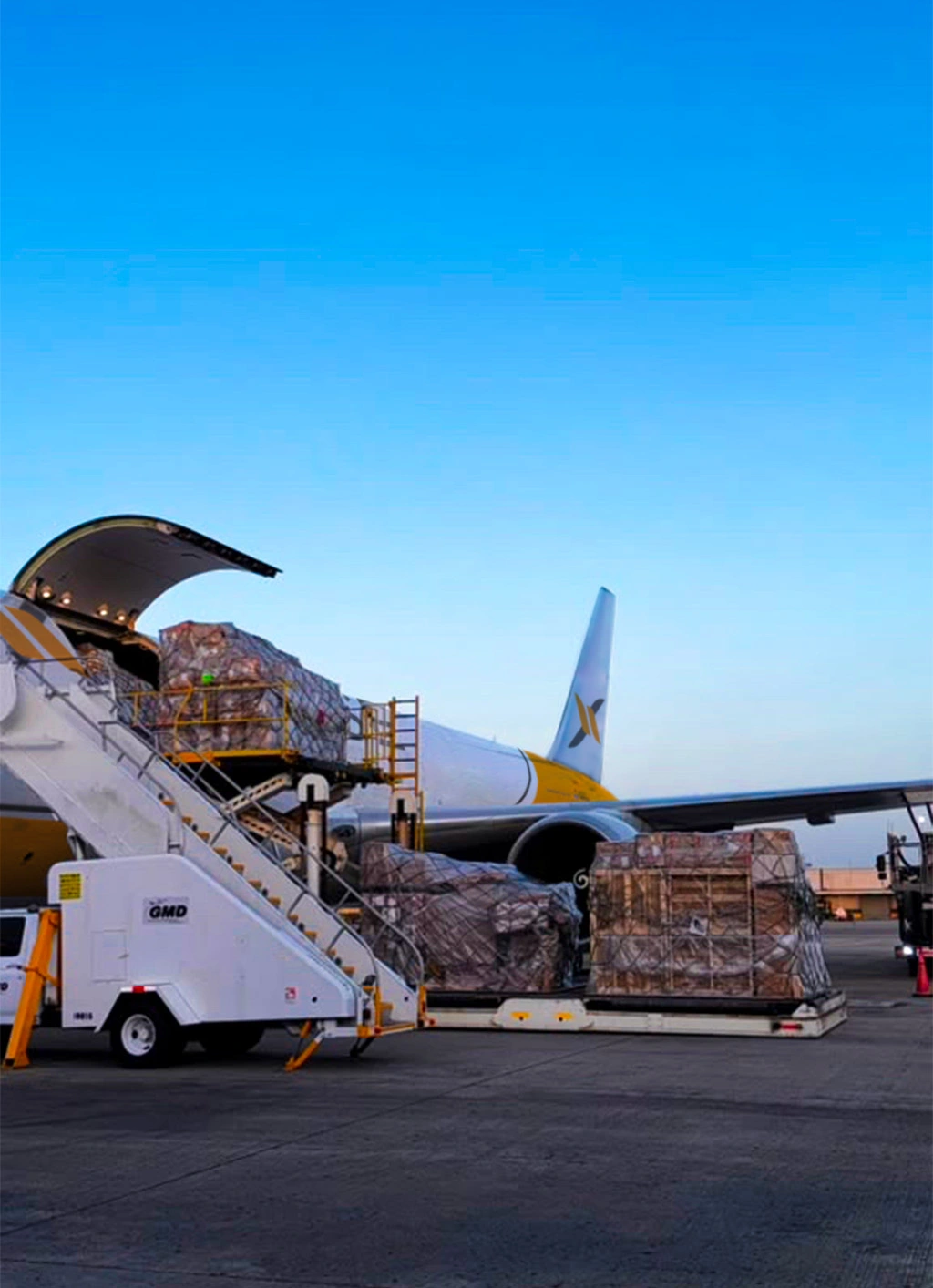
Global ecommerce has fundamentally transformed how businesses reach customers. Today, even small and medium-sized companies can sell products across continents, creating new opportunities for growth while also introducing greater complexity into supply chain management.
As customer expectations continue to evolve, ecommerce logistics is becoming a strategic advantage rather than simply an operational necessity. Faster delivery, real-time visibility, cross-border fulfillment, and resilient transportation networks are now essential for businesses competing in international markets.
The future of ecommerce logistics will be shaped by technological innovation, changing consumer behavior, and increasingly sophisticated global supply chains. Online sellers that understand these trends will be better positioned to improve customer satisfaction, optimize costs, and expand into new markets.
Why Ecommerce Logistics Is Entering a New Era
The ecommerce industry is growing rapidly, but so are customer expectations.
Consumers now expect:
- Faster deliveries
- Accurate shipment tracking
- Flexible delivery options
- Reliable international shipping
- Transparent communication
- Easy returns
Meeting these expectations requires much more than simply shipping products quickly. Businesses must coordinate inventory, warehousing, transportation, customs processes, and last-mile delivery across multiple countries.
This is why ecommerce logistics has evolved into a critical component of business strategy rather than just a fulfillment function.
According to the International Air Transport Association (IATA), air cargo continues to play a vital role in supporting global ecommerce by enabling fast and reliable transportation for time-sensitive shipments.
Trend 1: Cross-Border Ecommerce Will Continue Expanding
One of the biggest trends shaping the future is the continued growth of cross-border online shopping.
Customers increasingly purchase products from international brands because they expect:
- Better product selection
- Competitive pricing
- Unique merchandise
- Faster international delivery
For sellers, this creates enormous opportunities—but also greater logistical complexity.
International ecommerce requires businesses to manage:
- Customs clearance
- International transportation
- Inventory positioning
- Regional fulfillment
- Regulatory compliance
Successful companies increasingly partner with logistics providers capable of supporting efficient cross-border operations.
As discussed in
Why Air Freight Remains Critical for Time-Sensitive Ecommerce, reliable international transportation allows businesses to expand globally while maintaining competitive delivery times.
The World Trade Organization also highlights how digital trade continues to drive international commerce and reshape global supply chains.
Trend 2: Faster Fulfillment Will Become the Standard
Consumers no longer compare delivery experiences only within a specific industry.
They compare every purchase with the fastest delivery they have ever received.
As a result, businesses are under increasing pressure to reduce fulfillment times without sacrificing reliability.
Future ecommerce logistics strategies will focus on:
- Shorter order processing
- Faster international transportation
- Improved warehouse efficiency
- Better inventory positioning
- Reduced transit times
Air cargo plays an increasingly important role in supporting these objectives, particularly for international replenishment and high-priority inventory movements.
Businesses that can shorten delivery windows often gain meaningful competitive advantages through improved customer satisfaction and stronger brand loyalty.
Trend 3: Inventory Will Move Closer to Customers
Traditional supply chains often relied on large centralized warehouses serving multiple regions.
Today’s ecommerce environment increasingly favors distributed inventory strategies.
Instead of storing all inventory in one location, businesses are positioning products closer to demand through regional fulfillment centers.
This approach can help reduce:
- Delivery times
- Transportation costs
- Stockout risks
- Customer wait times
However, distributed inventory requires frequent replenishment between international warehouses.
This is where ecommerce logistics and air cargo work together.
Fast international transportation enables businesses to replenish regional inventory quickly while maintaining lean stock levels.
As explained in The Economics of Air Cargo: When Speed Creates More Value Than Cost Savings, transportation decisions increasingly focus on total supply chain value rather than freight cost alone.
Trend 4: Air Cargo Will Become Even More Important
Many ecommerce businesses depend on predictable international transportation.
When inventory shortages occur, businesses often cannot wait several weeks for ocean freight.
Air cargo provides:
- Faster replenishment
- Reduced inventory disruption
- Greater schedule predictability
- Better responsiveness to demand changes
As ecommerce continues expanding globally, the role of air transportation will become even more significant.
Rather than replacing ocean freight, air cargo complements broader supply chain strategies by supporting urgent shipments, product launches, seasonal demand, and inventory balancing.
Businesses increasingly recognize that speed creates value beyond transportation itself.
Air cargo helps protect sales opportunities while supporting better customer experiences.
As discussed in Air Cargo vs. Ocean Freight: The Complete Comparison Guide for Modern Supply Chains, selecting the appropriate transportation mode depends on shipment urgency, inventory strategy, and business objectives rather than freight rates alone.
Trend 5: Visibility Will Become a Customer Expectation
Shipment visibility is rapidly evolving from a competitive advantage into a basic customer expectation.
Modern consumers want to know:
- When their order shipped
- Where it is located
- When it will arrive
- Whether delays have occurred
Businesses also benefit from improved visibility.
Real-time shipment information helps supply chain teams:
- Coordinate warehouse operations
- Manage inventory
- Improve customer communication
- Respond faster to disruptions
Future ecommerce logistics will increasingly combine transportation with digital technologies that provide accurate shipment data throughout the delivery process.
As explored in Air Cargo Visibility: Why Real-Time Tracking Matters in Modern Logistics, greater transparency helps businesses make faster operational decisions while improving customer confidence.
Trend 6: Supply Chain Resilience Will Drive Logistics Decisions
Recent global disruptions demonstrated that efficient supply chains must also be resilient.
Businesses now evaluate logistics providers based not only on cost and transit time, but also on their ability to respond to changing market conditions.
Future ecommerce logistics strategies will prioritize:
- Flexible transportation networks
- Reliable capacity
- Diversified routing options
- Faster recovery from disruptions
- Consistent service performance
Network resilience has become an essential competitive advantage.
Companies capable of adapting quickly to demand fluctuations are better positioned to maintain customer satisfaction during periods of uncertainty.
As discussed in Network Optimization in Air Cargo: Routes, Capacity, and Demand, resilient transportation networks require strategic planning, efficient aircraft deployment, and adaptable logistics infrastructure.
Preparing for the Next Generation of Ecommerce
The future of ecommerce logistics will not be defined by a single innovation.
Instead, it will result from the integration of faster transportation, smarter technology, improved visibility, resilient supply chains, and increasingly efficient global fulfillment networks.
Businesses that begin adapting their ecommerce logistics today will be better prepared to meet tomorrow’s customer expectations while maintaining operational flexibility in an increasingly competitive marketplace.
Trend 7: Artificial Intelligence Will Make Logistics Smarter
Artificial intelligence (AI) is rapidly transforming how supply chains operate. Instead of simply reacting to disruptions, businesses are increasingly using AI to anticipate challenges and make faster, data-driven decisions.
For ecommerce logistics, AI can help improve:
- Demand forecasting
- Inventory planning
- Route optimization
- Warehouse efficiency
- Shipment scheduling
- Exception management
By analyzing large volumes of operational data, AI enables logistics providers to identify patterns that may not be immediately visible to human planners. This allows businesses to adjust inventory levels, optimize transportation capacity, and respond more quickly to fluctuations in customer demand.
For online sellers, smarter decision-making means fewer stockouts, better inventory turnover, and a more consistent customer experience.
Trend 8: Sustainability Will Become a Competitive Advantage
Consumers are placing greater importance on environmental responsibility, and ecommerce businesses are responding by making sustainability part of their logistics strategy.
Future ecommerce logistics will increasingly focus on:
- Optimized transportation networks
- Reduced unnecessary handling
- Better vehicle utilization
- Efficient packaging
- Lower carbon emissions
- Smarter inventory positioning
Sustainability does not necessarily mean slower transportation. In many cases, more efficient logistics networks reduce both operational costs and environmental impact.
Organizations such as the International Civil Aviation Organization (ICAO) continue promoting initiatives that support more sustainable aviation through operational efficiency and innovation.
As technology advances, sustainability and operational performance in ecommerce logistics will become increasingly aligned rather than competing priorities.
Trend 9: Network Optimization Will Improve Customer Experience
Customers judge ecommerce brands by the entire buying experience—not just the product itself.
Late deliveries, inconsistent tracking, and inventory shortages can quickly affect customer satisfaction and long-term loyalty.
This is why future ecommerce logistics strategies will emphasize network optimization.
Businesses will continue evaluating:
- Warehouse locations
- Transportation routes
- Carrier selection
- Inventory placement
- Transit performance
- Capacity planning
A well-designed logistics network reduces unnecessary transit time while improving reliability across every stage of fulfillment.
As explored in How Direct Air Cargo Routes Reduce Transit Times and Improve Supply Chains, streamlined transportation networks help businesses shorten delivery times while reducing operational complexity.
Trend 10: Time-Critical Fulfillment Will Continue Growing
Not every ecommerce shipment requires urgent delivery, but certain situations demand immediate transportation.
Examples include:
- Product launches
- Flash sales
- Seasonal inventory replenishment
- Limited-edition products
- Backorder recovery
- High-demand inventory
When products sell faster than expected, businesses often need rapid international replenishment to avoid losing sales.
Air cargo enables companies to respond quickly while maintaining product availability and protecting customer relationships.
As discussed in How Sunrise Air Cargo Handles Time-Critical and High-Value Shipments, transportation speed can significantly reduce the financial impact of inventory shortages and production delays.
For online retailers, fast replenishment often translates directly into higher revenue and stronger customer retention.
Data and Visibility Will Drive Better Decisions
Modern ecommerce businesses generate enormous amounts of operational data.
Future ecommerce logistics will increasingly use this information to improve:
- Inventory forecasting
- Customer communication
- Transportation planning
- Delivery performance
- Supplier coordination
Real-time visibility allows businesses to identify potential disruptions before they become major problems.
For example, shipment tracking is a key component of ecommerce logistics that can help warehouse teams prepare receiving operations, customer service teams communicate proactively with buyers, and inventory managers adjust replenishment plans based on expected arrival times.
Rather than simply monitoring shipments, businesses will use logistics data to improve overall supply chain performance.
Industry research from Statista continues to show strong investment in digital transformation throughout global logistics and supply chain management.
Building Flexible Supply Chains for Global Growth
As ecommerce expands into new international markets, flexibility will become one of the most valuable characteristics of any supply chain.
Future-ready businesses will prioritize logistics networks capable of adapting to:
- Seasonal demand fluctuations
- New international markets
- Supplier changes
- Capacity constraints
- Economic uncertainty
- Customer expectations
Flexible supply chains enable online sellers to grow without rebuilding their logistics operations every time market conditions change.
This adaptability allows businesses to respond faster while maintaining consistent service quality.
According to the World Bank’s Logistics Performance Index, efficient logistics infrastructure remains one of the strongest drivers of international trade competitiveness.
How Sunrise Air Cargo Supports Modern Ecommerce Logistics
At Sunrise Air Cargo, we recognize that today’s online sellers require more than fast transportation.
Successful ecommerce logistics depends on reliable capacity, strategic route planning, operational consistency, and the flexibility to support changing customer demand.
Our dedicated Boeing 767-300ER freighter operations help businesses move inventory efficiently across international markets while supporting:
- Cross-border ecommerce growth
- Faster inventory replenishment
- Time-sensitive shipments
- Regional distribution
- Reliable international connectivity
Whether supporting seasonal demand, urgent replenishment, or long-term supply chain strategies, Sunrise Air Cargo works with customers to help reduce transit times while improving operational reliability.
Readers interested in learning more about the aircraft supporting these operations can also explore
Inside the Boeing 767-300ER: Why It’s One of the World’s Most Trusted Cargo Aircraft.
What Should Online Sellers Do Next?
Preparing for the future of ecommerce logistics starts with evaluating the strength of your current supply chain.
Consider asking the following questions:
- Are your fulfillment centers positioned close to customer demand?
- Can your transportation network respond to unexpected sales spikes?
- Do you have reliable visibility across international shipments?
- Is inventory replenishment fast enough to avoid stockouts?
- Are you balancing transportation cost with customer expectations?
- Can your logistics partners support future international expansion?
Businesses that regularly evaluate these questions are better positioned to adapt as ecommerce continues evolving.
The Future Belongs to Agile Supply Chains
Global ecommerce will continue growing, but success will depend on much more than attracting customers.
The businesses that thrive will be those capable of delivering products quickly, consistently, and efficiently across international markets.
Future ecommerce logistics will be shaped by smarter technology, stronger visibility, optimized transportation networks, sustainable operations, and increasingly resilient supply chains.
For online sellers, logistics is no longer simply about moving products—it has become a strategic advantage that directly influences customer satisfaction, operational efficiency, and long-term growth.
At Sunrise Air Cargo, we help businesses navigate this changing landscape through dependable air freight solutions, dedicated freighter capacity, and international connectivity designed to support the next generation of global ecommerce.
As international trade continues to evolve, investing in agile, technology-driven ecommerce logistics will help online sellers remain competitive, responsive, and ready for future opportunities.