
Global supply chains have become increasingly complex. A single shipment may move through multiple airports, warehouses, customs facilities, and transportation providers before reaching its final destination. While these interconnected networks allow businesses to access customers around the world, every additional transfer introduces new operational risks that can affect transit time, shipment integrity, and overall supply chain performance.
For this reason, businesses are placing greater emphasis on direct cargo routes. By reducing unnecessary handling points and intermediate connections, direct routing helps create faster, more predictable, and more secure transportation solutions for a wide range of industries.
The advantages of direct cargo routes extend well beyond speed. Direct cargo routes can improve shipment reliability, reduce cargo handling, strengthen inventory planning, and lower the likelihood of operational disruptions. Whether transporting pharmaceuticals, aerospace components, ecommerce inventory, perishables, or other high-value goods, minimizing unnecessary cargo transfers through direct cargo routes has become an important strategy for building resilient supply chains.
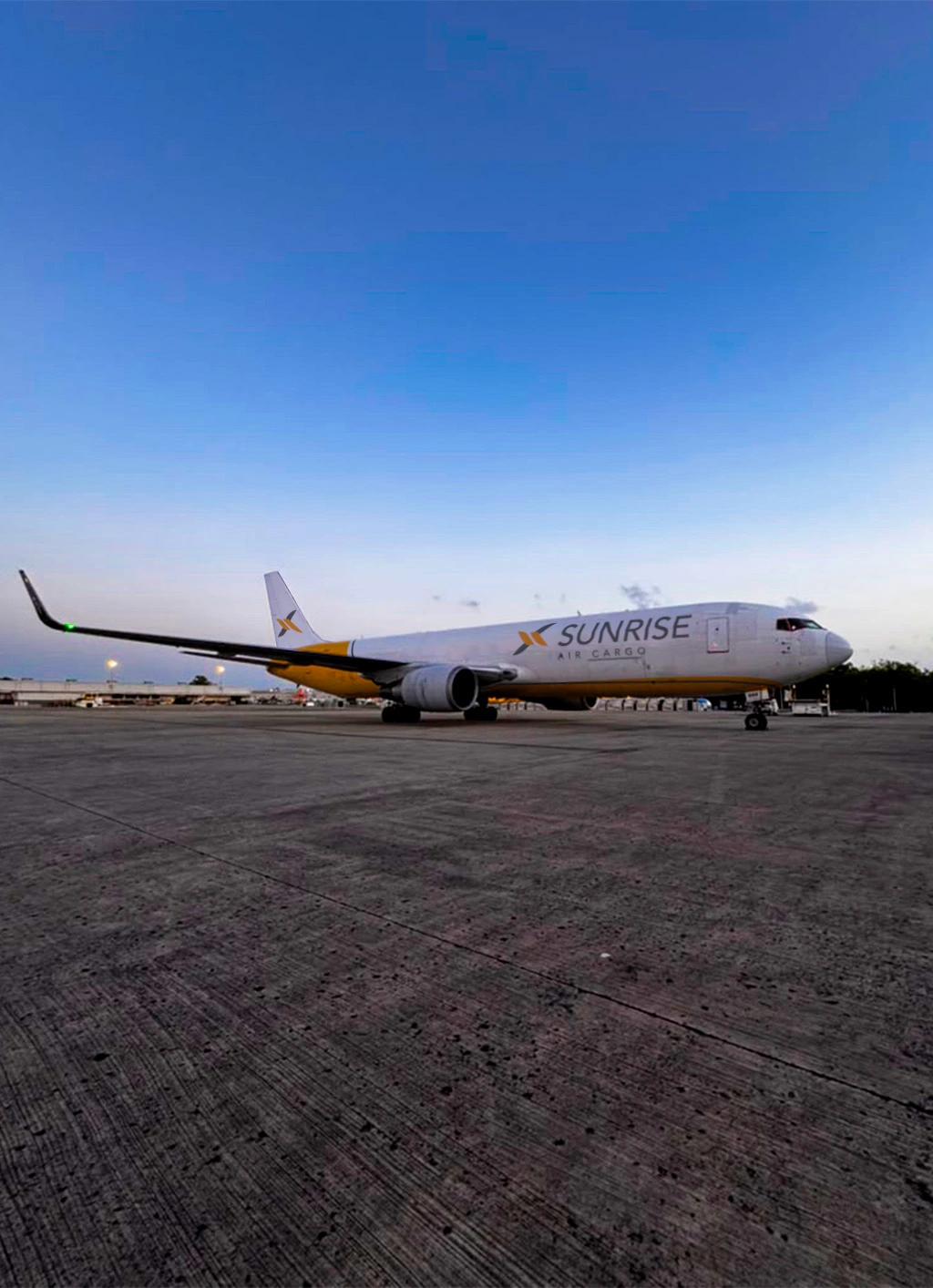
At Sunrise Air Cargo, we recognize that every shipment represents more than freight—it represents customer commitments, production schedules, inventory investments, and business continuity. Our approach focuses on providing reliable air cargo solutions supported by efficient routing, dedicated freighter capacity, and consistent operational performance.
Why Every Cargo Transfer Introduces Risk
Every time cargo changes location during its journey, another operational process begins.
A shipment moving through multiple airports may require:
- Unloading from one aircraft
- Ground transportation between facilities
- Temporary warehouse storage
- Security inspections
- Customs documentation
- Reloading onto another aircraft
Although each of these activities follows strict operational procedures, every additional step increases the complexity of the shipment’s journey.
Additional handling may increase exposure to:
- Flight connection delays
- Documentation errors
- Cargo misrouting
- Physical handling incidents
- Weather-related disruptions
- Capacity limitations
- Scheduling changes
While modern logistics providers work continuously to minimize these risks, reducing the number of handling events remains one of the most effective ways to improve overall shipment performance.
This is one of the primary reasons direct cargo routes have become increasingly valuable in today’s global logistics environment.
According to the International Air Transport Association (IATA), efficient air cargo operations depend on reducing unnecessary complexity while improving operational reliability throughout the supply chain.
What Are Direct Cargo Routes?
A direct cargo route refers to an air transportation service that minimizes intermediate stops and cargo transfers between the shipment’s origin and destination.
Rather than moving through multiple connecting hubs, direct cargo routes simplify transportation by reducing the number of operational stages required to complete the journey.
Although some direct services may include technical stops for operational purposes, the shipment itself generally remains on the same aircraft without repeated unloading and reloading.
This simplified routing provides important advantages for businesses seeking greater transportation consistency.
Compared with multi-connection networks, direct routing can reduce:
- Cargo handling events
- Transit variability
- Operational dependencies
- Scheduling complexity
- Exposure to unexpected delays
The result is a more predictable transportation process that supports stronger supply chain performance.
Why Less Handling Creates Better Outcomes
Every cargo movement requires people, equipment, documentation, and coordination.
The more frequently cargo is handled, the greater the opportunity for operational variation.
Reducing unnecessary handling can help improve:
- Shipment integrity
- Packaging protection
- Temperature stability
- Inventory accuracy
- Delivery predictability
For sensitive products such as pharmaceuticals, medical equipment, electronics, precision manufacturing components, and perishables, minimizing handling is particularly valuable.
This is one of the reasons direct cargo routes continue gaining importance across industries where product quality and delivery reliability directly influence business success.
As discussed in How Sunrise Air Cargo Handles Time-Critical and High-Value Shipments, reducing operational complexity helps protect cargo while supporting faster, more dependable logistics.
Fewer Connections Mean Greater Reliability
Transportation reliability depends on much more than aircraft performance.
Every connection introduces additional scheduling dependencies.
For example, a shipment moving through three airports depends on:
- Multiple aircraft departing on time
- Ground handling schedules
- Cargo transfer teams
- Cargo acceptance deadlines
- Available aircraft capacity
- Customs processing
- Weather conditions at multiple locations
Removing even one connection can significantly simplify the transportation process.
This makes direct cargo routes particularly attractive for businesses requiring dependable delivery schedules.
Rather than depending on multiple independent operations, cargo remains within a more streamlined transportation flow.
As explored in Air Cargo Performance After Peak Season: What Shippers Should Know, consistency often creates greater long-term supply chain value than transportation speed alone.
Reducing Operational Complexity
Supply chains perform best when unnecessary complexity is removed.
Simpler transportation networks allow businesses to:
- Improve shipment planning
- Coordinate inventory more effectively
- Reduce communication challenges
- Strengthen operational visibility
- Respond faster to disruptions
This philosophy extends beyond transportation itself.
It supports better decision-making across procurement, manufacturing, warehousing, and distribution.
Our previous article, Network Optimization in Air Cargo: Routes, Capacity, and Demand, explains how efficient route planning helps cargo operators balance capacity, demand, and operational performance while reducing unnecessary transportation complexity.
Why Transit Time Is Only Part of the Story
Many businesses evaluate transportation primarily by total transit time.
While speed remains important, predictable transportation often provides even greater operational value.
Consider two shipments:
- Shipment A arrives in two days but experiences frequent delays.
- Shipment B consistently arrives in three days.
Many supply chain managers would choose the second option because predictable delivery allows more accurate planning.
This illustrates why direct cargo routes create value beyond simply reducing transportation time.
They help businesses build confidence in expected arrival schedules, improving production planning, inventory management, customer communication, and overall operational efficiency.
The relationship between speed, reliability, and business value is discussed further in The Economics of Air Cargo: When Speed Creates More Value Than Cost Savings, where we examine how transportation decisions influence the entire supply chain rather than freight costs alone.
Direct Cargo Routes Support Stronger Supply Chains
Supply chain resilience depends on reducing unnecessary risk while maintaining flexibility.
Businesses increasingly seek logistics networks capable of responding quickly to changing customer demand without introducing additional operational complexity.
By minimizing transfers and simplifying transportation flows, direct cargo routes support:
- Better inventory management
- More reliable replenishment
- Reduced operational risk
- Greater shipment visibility
- Improved customer satisfaction
These advantages are becoming increasingly important as businesses continue adopting lean inventory strategies and serving customers across global markets.
As discussed in Air Cargo in 2026: Why Speed, Reliability, and Capacity Matter More Than Ever, resilient logistics networks are increasingly built around reliability, operational efficiency, and strategic route planning rather than transportation cost alone.
Faster Transit Times Create Competitive Advantages
Speed remains one of the greatest advantages of air cargo, but the true value of direct cargo routes extends beyond simply shortening a shipment’s journey.
Every hour removed from transit can help businesses:
- Respond faster to customer demand
- Reduce inventory replenishment cycles
- Accelerate product launches
- Improve production planning
- Strengthen customer service
For organizations operating lean supply chains, faster transit means inventory spends less time moving through the logistics network and more time generating revenue.
Instead of waiting for cargo to pass through multiple transfer hubs, direct routing creates a more efficient path between origin and destination.
As explored in How Direct Air Cargo Routes Reduce Transit Times and Improve Supply Chains, reducing unnecessary connections improves both transportation speed and overall supply chain responsiveness.
Protecting High-Value Cargo
Not every shipment carries the same level of operational or financial risk.
Products such as pharmaceuticals, medical devices, aerospace components, precision electronics, luxury goods, and industrial machinery often require careful handling throughout the transportation process.
For these shipments, every additional transfer creates another opportunity for delay, mishandling, or environmental exposure.
By minimizing intermediate handling, direct cargo routes help protect shipment integrity while supporting more consistent transportation conditions.
This is particularly important for businesses where product quality, regulatory compliance, or customer commitments depend on dependable logistics execution.
Temperature-Sensitive Shipments Benefit From Fewer Handling Events
Temperature-controlled cargo requires continuous monitoring throughout its journey.
Products such as:
- Pharmaceuticals
- Vaccines
- Fresh flowers
- Seafood
- Fresh produce
- Specialty food products
can be affected by unnecessary transfers between aircraft, warehouses, or cargo terminals.
Although cold chain procedures are carefully managed, reducing handling events provides an additional layer of operational protection.
This is another reason direct cargo routes have become increasingly valuable for industries requiring strict environmental control throughout transportation.
Fewer transfers help simplify the cold chain while reducing opportunities for operational variation.
Supporting Global Ecommerce Growth
International ecommerce has permanently changed customer expectations.
Consumers increasingly expect products ordered from another country to arrive quickly, with accurate tracking and dependable delivery dates.
For online retailers, transportation delays can result in:
- Stock shortages
- Lost sales
- Higher fulfillment costs
- Reduced customer satisfaction
Direct cargo routes help ecommerce businesses maintain inventory availability by shortening international replenishment cycles and reducing variability in delivery performance.
Businesses serving global markets increasingly depend on efficient air cargo networks to support fast-moving inventory and maintain competitive delivery commitments.
As discussed in The Future of Global E-commerce Logistics: Trends Every Online Seller Should Watch, transportation speed and supply chain flexibility are becoming key differentiators for online sellers competing internationally.
Inventory Planning Becomes More Predictable
Inventory planning depends heavily on transportation consistency.
When shipment arrival dates vary significantly, businesses often compensate by carrying larger safety stock.
Additional inventory increases costs related to:
- Warehousing
- Insurance
- Financing
- Inventory management
More predictable direct cargo routes allow organizations to forecast replenishment with greater confidence.
This helps companies reduce inventory levels while maintaining product availability.
Businesses operating under just-in-time or lean inventory strategies particularly benefit from transportation networks that consistently deliver on schedule.
Visibility Improves Along Simpler Transportation Networks
Shipment visibility has become an essential component of modern logistics.
Customers increasingly expect:
- Real-time shipment updates
- Accurate arrival estimates
- Immediate disruption notifications
- Greater transparency
Simpler transportation networks often make shipment tracking more consistent because fewer operational handoffs occur throughout the journey.
Rather than coordinating updates across multiple transfer points, direct cargo routes create a more streamlined flow of information.
As discussed in Air Cargo Visibility: Why Real-Time Tracking Matters in Modern Logistics, better visibility supports stronger planning while improving customer communication and operational decision-making.
Industry research from Statista also highlights the continued investment in digital technologies throughout transportation and supply chain management.
Dedicated Freighters Enhance Direct Connectivity
The success of direct routing depends not only on network design but also on the aircraft supporting those routes.
Dedicated freighters provide advantages including:
- Reliable cargo capacity
- Flexible scheduling
- Efficient loading procedures
- Specialized cargo configurations
Unlike passenger aircraft, dedicated cargo aircraft are optimized specifically for freight operations.
This enables operators to better match capacity with customer demand through direct cargo routes, while supporting time-sensitive shipments.
Aircraft capability therefore becomes an important part of the value created by direct cargo routes.
Readers interested in learning more can explore Inside the Boeing 767-300ER: Why It’s One of the World’s Most Trusted Cargo Aircraft, where we examine how aircraft design supports efficient cargo operations.
For official Boeing 767 specifications: https://www.boeing.com/commercial/767
Direct Routes Support More Resilient Supply Chains
Resilience is no longer simply the ability to recover after disruption.
It is the ability to continue operating efficiently despite changing market conditions.
Businesses increasingly evaluate logistics providers based on their ability to support:
- Flexible routing
- Reliable capacity
- Consistent transit performance
- Predictable scheduling
- Operational continuity
By reducing unnecessary operational dependencies, direct cargo routes help businesses create transportation networks that are easier to manage and more adaptable when conditions change.
Organizations such as the World Bank continue recognizing efficient logistics infrastructure as a key factor supporting international trade competitiveness.
How Sunrise Air Cargo Supports Direct Routing
At Sunrise Air Cargo, we believe every shipment deserves a transportation strategy designed around reliability, efficiency, and operational simplicity.
Our dedicated Boeing 767-300ER freighter operations allow us to support customers with direct routing solutions that reduce unnecessary handling while improving shipment predictability.
Our approach focuses on:
- Strategic route planning
- Dedicated cargo capacity
- Reliable scheduling
- Time-sensitive transportation
- High-value cargo expertise
- Consistent operational performance
Where market demand supports direct cargo routes, streamlined routing helps customers strengthen inventory planning, reduce transit complexity, and improve overall supply chain performance.
A practical example is our direct Miami–Caracas cargo service, which demonstrates how reducing intermediate connections can improve efficiency while supporting reliable cross-border trade.
You can learn more in Miami to Caracas: Strengthening Cargo Connectivity Between Key Markets, where we explain how direct service enhances cargo movement between these strategically important markets.
Direct Routing Is a Long-Term Supply Chain Strategy
Choosing direct routing is not simply about moving cargo faster.
It is about building transportation networks that reduce risk, simplify operations, and create long-term business value.
Companies evaluating logistics strategies should consider:
- How many handling events can be eliminated?
- Can inventory be reduced?
- Will shipment predictability improve?
- Does faster replenishment support customer demand?
- Can fewer transfers reduce operational risk?
Answering these questions provides a broader understanding of transportation performance than transit time or freight cost alone.
Final Thoughts
Every additional transfer, handling event, and connection introduces new complexity into the supply chain.
While modern logistics networks are designed to manage these processes efficiently, leveraging direct cargo routes to reduce unnecessary operational steps remains one of the most effective ways to improve transportation performance.
By minimizing cargo handling, reducing transit variability, and simplifying shipment flows, direct cargo routes help businesses strengthen inventory planning, improve shipment integrity, and build more resilient global supply chains.
For organizations moving high-value, time-sensitive, or specialized freight, these advantages extend well beyond transportation speed—they support better business outcomes across the entire supply chain.
At Sunrise Air Cargo, our commitment to direct routing, dedicated freighter operations, and reliable service reflects our belief that the most effective logistics solutions are those that combine operational efficiency with consistent performance.
As global commerce continues evolving, direct cargo routes will remain a cornerstone of faster, safer, and more resilient international air cargo operations.