
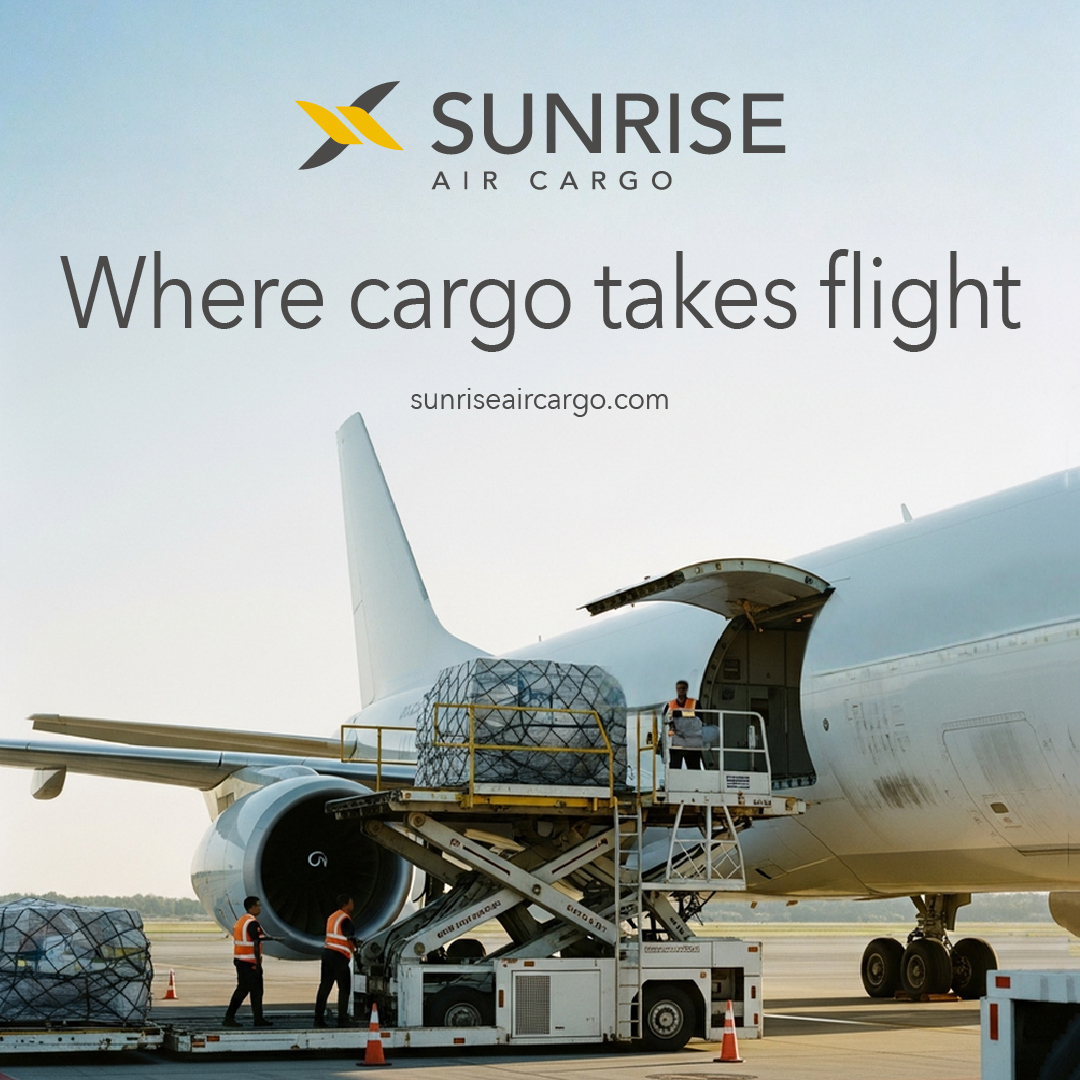
The logistics landscape is shifting beneath our feet. As supply chains normalize after years of volatility, the focus for the coming year turns toward sustainable growth and technological integration. For businesses relying on rapid global transport, understanding the landscape of Air Cargo 2026 is not just about keeping up; it is about securing a competitive advantage in a crowded marketplace.
At Sunrise Air Cargo, we see a distinct horizon forming for Air Cargo 2026. The scramble for capacity that defined previous years is settling into a more strategic phase. Shippers, freight forwarders, and carriers are now looking at efficiency, digitalization, and green initiatives as the primary drivers of success. This guide explores the critical factors shaping the industry this year.
The State of the Market: Stability Returns
After a period of readjustment, the forecast for Air Cargo 2026 looks promising. Analysts project steady, reliable growth rather than the chaotic spikes seen earlier in the decade. The International Air Transport Association (IATA) and other industry bodies suggest that we will see volume increases hovering around the 2.4% to 3% mark. While this might seem modest compared to the post-pandemic boom, it represents a healthy, sustainable trajectory for the sector.
Revenue is also expected to stabilize. The fever-pitch rates of the past have cooled, allowing for more predictable budgeting for shippers. However, this stability does not mean stagnation. The total value of goods transported by air continues to rise, driven by high-value electronics, pharmaceuticals, and luxury goods.
For logistics managers, this new stability means you can plan farther ahead. You are no longer reacting to daily crises but building robust supply chains that can withstand minor shocks. The Air Cargo 2026 environment favors those who prioritize long-term partnerships over spot-market gambling.
E-Commerce: The Engine That Won’t Quit
If there is one undeniable force propelling Air Cargo 2026, it is the relentless expansion of global e-commerce. Consumers have grown accustomed to two-day delivery windows, regardless of where the product originates. This “need it now” culture is pushing cross-border trade to new heights.
Major online marketplaces are expanding their reach into emerging markets in Africa, Latin America, and Southeast Asia. These regions lack the dense road and rail infrastructure of Europe or North America, making air freight the only viable option for time-sensitive deliveries. As we look ahead to Air Cargo 2026, we are seeing a shift in route profitability. Traditional lanes remain busy, but the fastest growth is happening in the “Global South.”
To capitalize on this, airlines are converting older passenger aircraft into freighters at a steady clip. This increase in dedicated freighter capacity ensures that even as passenger belly-hold capacity fluctuates seasonally, the e-commerce pipeline remains open.
Digitalization: The End of Paper
The era of the paper air waybill is finally drawing to a close. One of the most significant shifts in Air Cargo 2026 is the aggressive adoption of digital standards. The industry has talked about “e-freight” for decades, but 2026 is the year adoption hits critical mass.
We are seeing the implementation of:
- Real-time tracking: IoT devices are now standard on unit load devices (ULDs), providing granular data on location, temperature, and shock.
- AI-driven routing: Algorithms now predict weather disruptions and congestion days in advance, allowing carriers to reroute cargo before it gets stuck.
- Digital corridors: Customs agencies are collaborating to create “green lanes” for pre-cleared digital cargo, drastically reducing dwell times at airports.
For our clients at Sunrise Air Cargo, this means visibility. You will know exactly where your shipment is, down to the meter, and when it will arrive. The opacity that once plagued air freight is vanishing.
Sustainability: No Longer Optional
Perhaps the most critical conversation surrounding Air Cargo 2026 involves the environment. Sustainability has moved from a “nice-to-have” corporate social responsibility metric to a hard operational requirement.
Governments worldwide are tightening regulations on aviation emissions. In response, the industry is accelerating the adoption of Sustainable Aviation Fuel (SAF). While SAF is currently more expensive than traditional jet kerosene, production is scaling up, and mandates in the European Union and parts of Asia are forcing carriers to blend it into their fuel supply.
Shippers are also driving this change. Major corporations now require detailed carbon reporting for their logistics operations to meet their own net-zero goals. In Air Cargo 2026, a forwarder who cannot provide a carbon calculation for a shipment is at a disadvantage. We are seeing a rise in “book and claim” systems, where shippers pay a premium to fund SAF usage, claiming the carbon reduction credit for their own reporting.
For more on how the industry is tackling emissions, you can read about IATA’s commitment to Fly Net Zero.
The Rise of Specialized Cargo
Generic freight is becoming less of a focus for premium air carriers. The real value in Air Cargo 2026 lies in specialized verticals. Two sectors, in particular, are demanding more sophisticated handling: pharmaceuticals and perishables.
Pharma and Life Sciences
The lessons learned during the global vaccine distribution efforts have permanently upgraded cold chain infrastructure. We now have “pharma corridors” where airports are certified to handle temperature-sensitive medications without a single degree of deviation. Looking ahead to Air Cargo 2026, we expect to see an increase in personalized medicine and gene therapies moving by air. These are high-value, low-volume shipments that require white-glove service.
Perishables and Food Security
As climate change impacts local agriculture, nations are increasingly relying on air imports to ensure food security. We are seeing more fresh produce moving by air from South America and Africa to Asia and Europe. The technology to keep these goods fresh—such as modified atmosphere packaging—is advancing rapidly, extending shelf life and reducing waste.
Regional Hotspots to Watch
Geography plays a massive role in the strategy for Air Cargo 2026. While the Trans-Pacific and Trans-Atlantic routes are the traditional heavyweights, new players are emerging.
Southeast Asia: As manufacturing continues to diversify away from China (the “China Plus One” strategy), countries like Vietnam, Thailand, and Malaysia are seeing a boom in air export volumes. The infrastructure in these nations is rapidly modernizing to handle the load.
The Middle East: Hubs in Dubai, Doha, and Abu Dhabi are solidifying their positions as the world’s crossroads. Their massive investment in airport infrastructure and free trade zones makes them attractive for sea-air multimodal solutions, which offer a balance between the speed of air and the cost of ocean freight.
India: With a booming manufacturing sector and a government push to improve logistics performance, India is a key growth market. New airports and streamlined customs processes are making it easier to move goods in and out of the subcontinent.
For insights into regional trade shifts, check out The World Bank’s logistics performance data.
Challenges on the Horizon
Despite the optimism, Air Cargo 2026 is not without its hurdles. Geopolitical instability remains the wildcard. Conflicts can close airspace overnight, forcing carriers to take longer, more expensive routes. This adds fuel cost and time to shipments, impacting the bottom line.
Labor shortages also persist. From pilots to ground handlers and warehouse staff, the industry is competing for talent. Automation is helping—automated guided vehicles (AGVs) in warehouses are becoming common—but the human element remains vital.
Furthermore, the “last mile” remains a bottleneck. While air transport is fast, getting goods from the airport to the final destination can still be slow due to urban congestion. Innovative solutions, such as drone delivery for the final leg, are being tested but are not yet widespread.
Strategic Shifts for Freight Forwarders
For freight forwarders, the role is changing. In the Air Cargo 2026 ecosystem, a forwarder is more of a consultant than a booking agent. Shippers need advice on compliance, carbon offsets, and packaging optimization.
At Sunrise Air Cargo, we have adapted to this shift by investing in our people and our technology. We understand that our clients need data interpretation, not just data access. Helping a client choose between a direct flight or a deferred service that saves 20% on cost and 15% on carbon emissions is where we add value.
The integration of customs brokerage into the standard air freight offering is another trend. With regulations changing rapidly, having an integrated compliance team prevents costly delays at the border.
Security in a Connected World
With increased digitalization comes increased risk. Cybersecurity is a top priority for Air Cargo 2026. A cyberattack on a major hub or carrier could ground flights and freeze supply chains.
The industry is adopting “cyber-resilience” frameworks. This means redundant systems and rigorous vetting of third-party software vendors. Physical security is also evolving. The screening of cargo is becoming faster and more accurate thanks to CT scanning technology, which allows for 3D imaging of pallets without breaking them down. This speeds up the flow of goods while maintaining high security standards.
You can learn more about aviation security standards at the International Civil Aviation Organization (ICAO).
The Role of Multimodal Solutions
While this article focuses on air freight, Air Cargo 2026 does not exist in a vacuum. The most efficient supply chains are hybrid. We are seeing a rise in “Sea-Air” products. For example, goods might travel by ship from Shanghai to Dubai, and then fly from Dubai to London. This cuts transit time by 50% compared to ocean freight while cutting costs by 40% compared to pure air freight.
This multimodal approach requires seamless data integration between ocean carriers and airlines. The digital platforms emerging in 2026 are finally making this hand-off smooth and transparent.
Preparing Your Business for 2026
So, how should your business prepare for the Air Cargo 2026 landscape?
- Audit your supply chain: Identify which goods truly need air speed and which can move to multimodal solutions.
- Digitize your data: Ensure your internal systems can communicate with carrier APIs for real-time tracking.
- Set sustainability goals: Measure your logistics carbon footprint now so you can manage it later.
- Diversify partners: Don’t rely on a single carrier or route. Build flexibility into your logistics plan.
The market is maturing. The frantic energy of the early 2020s has given way to a sophisticated, data-driven, and sustainability-focused industry.
Conclusion
The outlook for Air Cargo 2026 is one of cautious optimism and profound transformation. The industry is smarter, cleaner, and more efficient than it has ever been. Opportunities abound for businesses that leverage these shifts—using air freight not just as a transport method, but as a strategic tool to unlock new markets and satisfy customer demand.
At Sunrise Air Cargo, we are ready to navigate these changes with you. Whether it is navigating complex customs regulations, finding capacity during peak season, or reducing your carbon footprint, the future of flight is bright. As global trade continues to evolve, staying informed and agile is the only way to fly.